Life can sometimes throw you a curveball, no matter where you are. Having a well put together first aid kit on hand can help in a medical emergency – especially when exploring the great outdoors and you’re far from home. It’s also important you know what’s inside your first aid kit and how to effectively use each item.
First Aid Kit Essentials
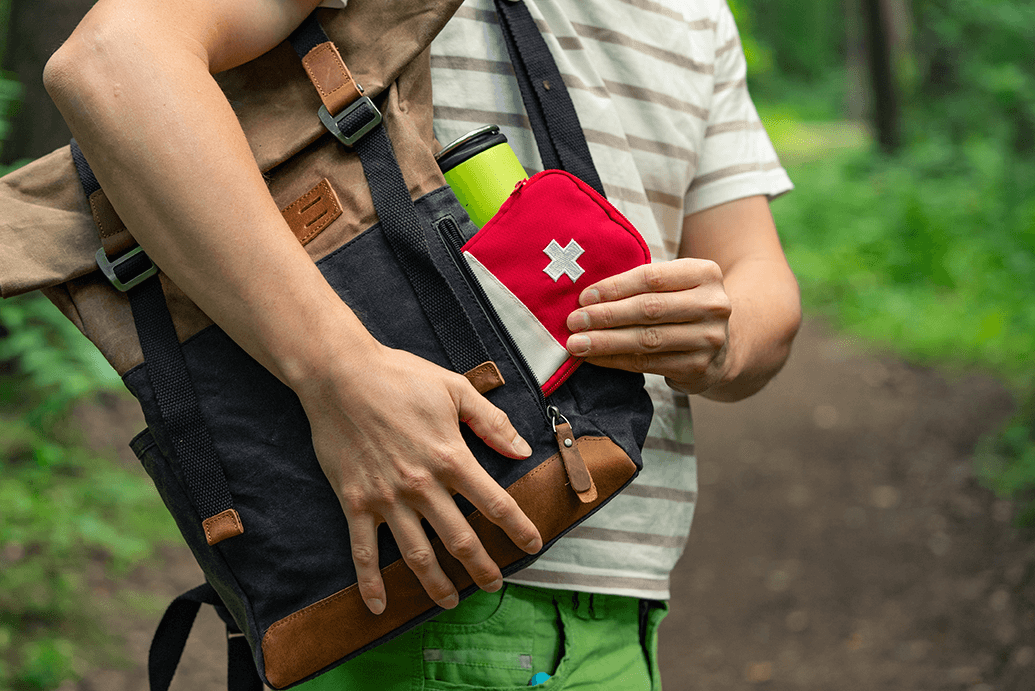
When you’re putting together your outdoors first aid kit, here’s a list of essential first aid items to include – and some helpful information about what each item can help you with.
Items for protection:
Face shield or resuscitation mask – to prevent fluids from transferring to or from you when performing CPR on someone.
Resealable bags – to put any rubbish, used, or contaminated items in when you’re finished with them.
Disposable gloves – to protect you from any body fluids and to keep the injured person safe from infections.
Items to clean you and any wounds:
Antiseptic solutions/sprays/wipes/ointments – to clean wounds and help prevent infection before applying dressings or bandages. Products containing Povidone-iodine is considered by experts to kill the widest range of microbes (bacteria, viruses, fungi, and protozoa) compared with other common antiseptics.
Alcohol-free wipes – for general clean-up around wounds and for cleaning out minor wounds.
Alcohol gel/hand sanitiser – to clean your hands if there’s no water for handwashing available.
Sterile saline – to flush out eyes or any wounds to help clean them before treatment.
Various bandages for different purposes:
Compression bandage – for pressure immobilisation. Triangle bandages – to fold and use as a sling or a dressing for larger injuries (only if sterile).
Crepe bandages – stretchy fabric helps hold wound dressings in place, support sprains or strains, and apply pressure to help control bleeding.
Wound dressings to cover open injuries:
Sterile gauze pads – for cleaning wounds, to use as padding, and for applying pressure directly to help control bleeding. It is essential the gauze is sterile to help prevent infection.
Adhesive strips or dressings – also known as Band-Aids, these come in various sizes to cover minor open wounds and help prevent dirt or microorganisms from getting in.
Non-adherent wound dressings – designed to cover open wounds without sticking. Eye pad – eye pads to cover and protect the eyes if they are injured.
Other helpful items:
Cooling gel or ice pack – for minor burns (gel) or to reduce swelling and pain.
Tweezers, scissors, and safety pins – to help remove foreign objects from a wound (e.g., splinters or glass), to cut through clothes or bandages, and to hold bandages in place, respectively.
Adhesive tape – to hold dressings and bandages in place.
Medications – consider including your personal prescriptions as well as more basic medications such as pain relief tablets or antihistamines.
Emergency blanket – sometimes called a rescue blanket or space blanket, this can be used to help retain body heat when someone is in shock or experiencing hypothermia.
First aid manual, notebook, and pen – for instructions on what to do in specific situations and to write down everything you did so you can tell someone when help arrives.
Disposable poncho, compass, torch, and batteries – helpful tools when camping or spending time outdoors.
Maintaining your first aid kit
A first aid kit is only as useful as the items it contains, so make sure you check your supplies regularly. To maintain your first aid kit, make sure you replace anything that has been used straight away, check everything in the kit for expiry dates or damage at least once a year, and make sure all sterile items are still sealed.
Frequently asked questions (FAQs)
Q. Where should I store my first aid kit when camping?
A. Store in a safe, cool, and dry place you can easily get to, but remember to keep it out of the reach of children.
Q. How often should I check and restock my first aid kit?
A. Every time you use something from your first aid kit, it should be replaced as soon as possible. Otherwise, a yearly check is recommended to ensure nothing is damaged, open, or out of date is a good idea.
Q. What are the absolute essentials for a camping first aid kit?
A. A camping first aid kit should contain items for protection such as disposable gloves and a resuscitation mask, items to clean such as alcohol-free wipes, hand sanitiser, and antiseptic products, various bandages and wound dressings to support and cover injured areas, plus some extras such as a disposable poncho, compass, torch, and batteries.
Q. What is a first aid manual?
A. A first aid manual is an instruction guide for how to provide basic first aid in an emergency.
ALL-2026-01-0010